Kettlebell Lifting Technique
Kettlebell Lifting Technique
Gripping the Kettlebell
The handle and its relationship with the bell is the key design feature of the kettlebell. Most kettlebell exercises involve either a finger-hook grip or a hand-insertion grip, making correct technique in these positions essential from the start.
Inefficient grips cause decreased circulation to the forearms, wrists, hands, and fingers — leading to premature fatigue. If you have to put the kettlebell down before reaching maximum effort, you cannot reach your anaerobic or aerobic thresholds.
Optimal Grip
With your palm up, insert your middle finger through the middle of the kettlebell. This creates even weight distribution among all the fingers. From there, create a hook grip by placing the index finger under the thumb. This offers the best combination of grip stability and mobility.
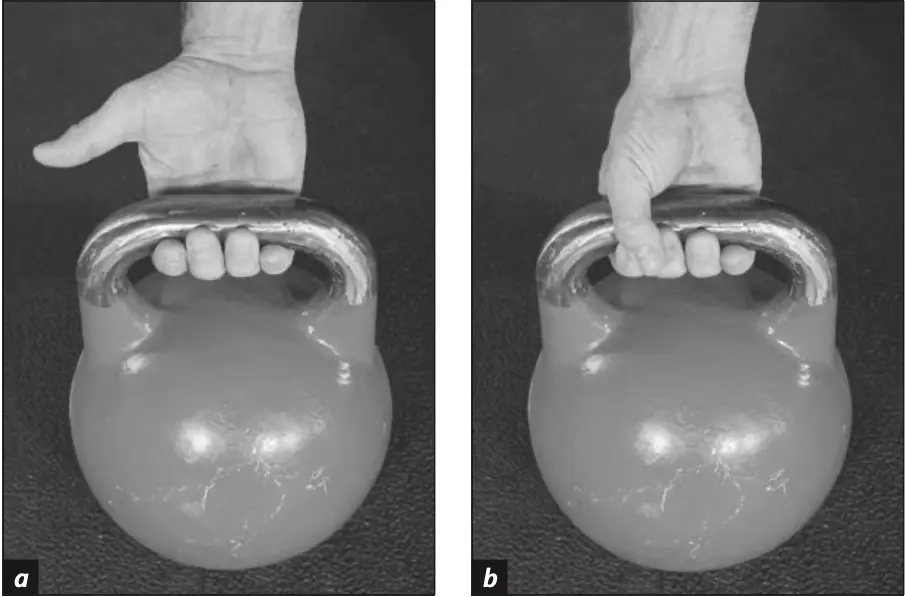
Figure 6.1 proper kettlebell grip.
Alternative Grip
If your hand and fingers cannot make a complete loop (fingers too short or handle too thick), use an alternative grip: fingers gripping the handle with the thumb placed on the outside of the handle to secure it.
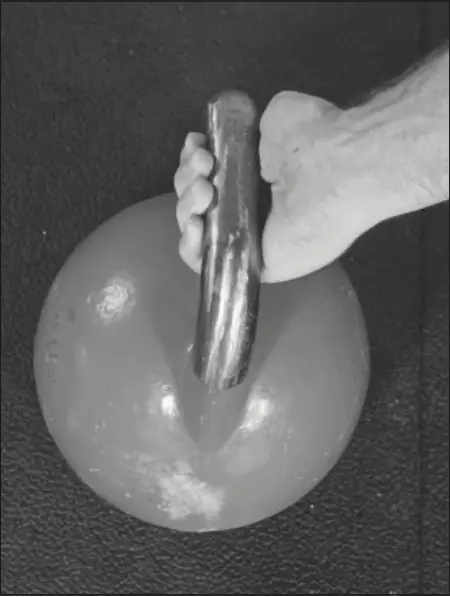
Figure 6.2 Alternative kettlebell grip where the thumb is outside the handle.
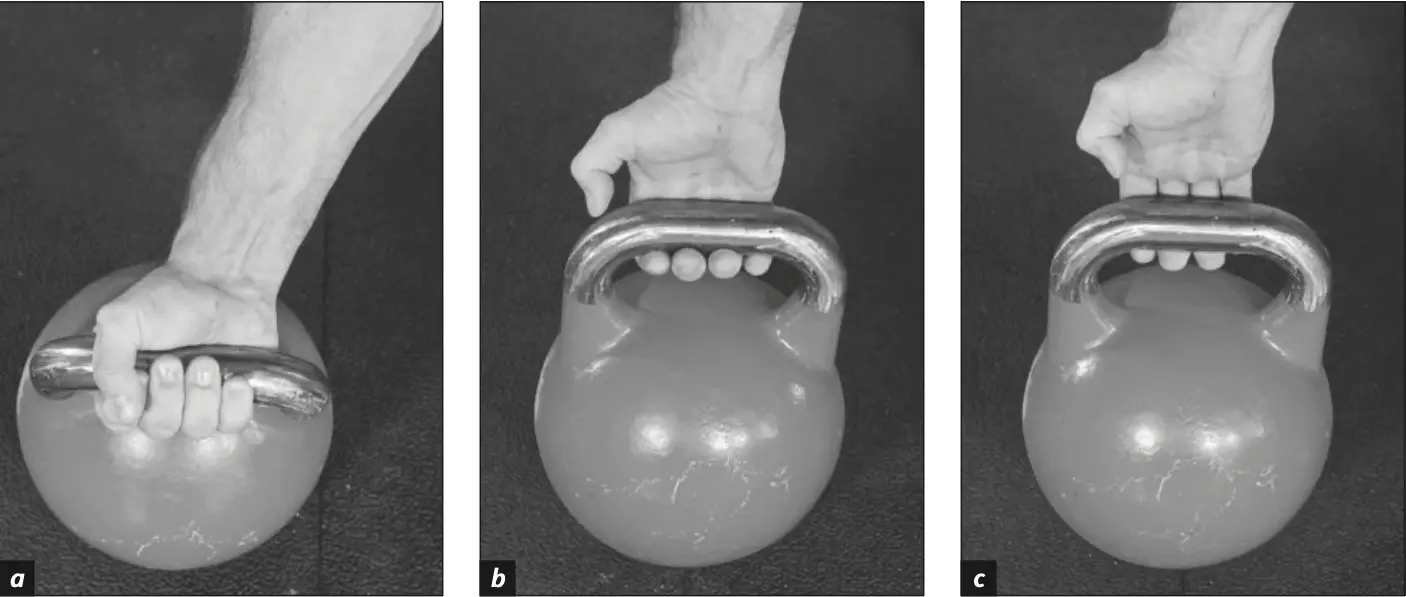
Figure 6.3 Incorrect kettlebell grips: (a) squeezing the palm, (b) holding too loosely, and (c) holding with only the fingertips.
Chalking the Kettlebell
Chalk prevents sweat from getting on your hands while lifting, helping you hold the kettlebell longer during working sets. You will have to experiment to see if it helps — some people's hands respond positively (enhanced grip), while others find it dries the hands too much and causes blisters. Climate also affects the outcome.
Chalk Application Steps
Sand the kettlebell handle using fine sandpaper. This creates the slightly rough surface needed for the chalk to bind to the bell.
Mist the kettlebell lightly with water from a spray bottle.
Massage the chalk onto the handle. If done correctly, these steps will cause the chalk to bind to the handle.
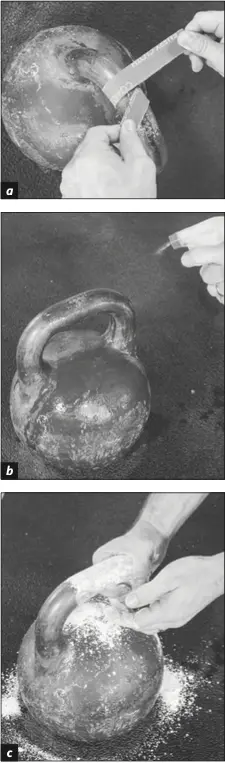
Figure 6.4 Applying chalk to the handle of a kettlebell: (a) sanding, (b) misting, and (c) massaging.
Breathing Technique
You will use two common breathing techniques in kettlebell training. The choice depends on your effort level:
- Paradoxical breathing — brief, high-intensity sets with a heavy load
- Anatomical breathing — longer sets with a lighter load
Paradoxical Breathing
Inhale on compression, exhale on extension. For example, in a squat you inhale as you descend and exhale as you stand up.
Ideal for heavy loads and deconditioned people due to the thoracic pressure and spinal stability it provides.
Anatomical Breathing
Exhale on compression, inhale on extension. For example, in a squat you exhale as you drop down and inhale as you stand up. Also called matching breathing because it is congruent with natural movement patterns.
Ideal for endurance and work capacity — helps you manage your heart rate more effectively. Used by kettlebell sport lifters to achieve world-class results.