Types Of Kettlebells
There are two common types of kettlebells: the cast-iron classic (or fitness) kettlebell and the steel competition (or sport) kettlebell.
Cast-Iron Classic Kettlebell
The cast-iron classic, or fitness, kettlebell, as shown in figure 2.1, is a less expensive type of kettlebell because it is easier to make. The material is solid and will last for years or even a lifetime.
Variable Sizing
Cast-iron kettlebells are made using molds of various sizes. The heavier the kettlebell, the larger it is.
8 kg (18 lb)
32 kg (71 lb)
When training with kettlebells for general fitness, kettlebell dimensions do not matter as much as they do in competitions, which you will learn about in the next section.
But for general fitness, this difference will not be as noticeable because you will be starting with 10, 15, 20, or 30 reps at a time, not 50, 80, or 100 reps. Another advantage of the cast-iron kettlebells is that they are a bit less expensive than competition kettlebells and are still plenty sturdy, so they are a good investment considering cost, quality, and performance.
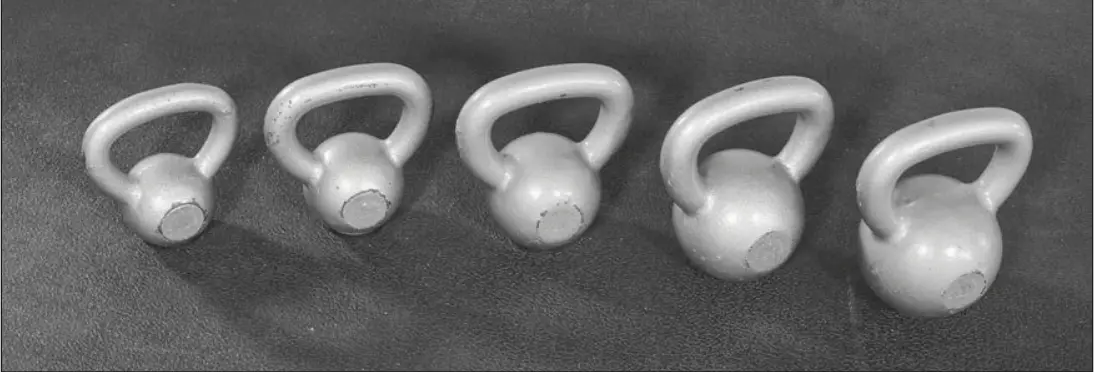
Figure 2.1 Cast-iron classic kettlebells.
Competition Kettlebell
The competition, or sport, kettlebell, as shown in figure 2.2, is also the international standard of measurement and design for kettlebell training and sport.
Though kettlebell lifting is only about 10 years old in most of the Western world and Asia, in Eastern Europe and particularly in Russia, kettlebell training has evolved into a high-level competitive sport. As with all sports, there are standardized equipment and rules. Kettlebell experts looked at design and performance and came up with measurements that are best suited for performance. All competitive kettlebell lifters train and compete with standardized kettlebells.
Standard Specifications
The competition kettlebell is made of steel and is hollow. Aside from being made from steel and thus more expensive than types made from less expensive materials, the competition kettlebell has a universal design and measurement:
Height
Diameter
Handle Diameter
How They Achieve Uniform Size
This is made possible by using a mold that is hollow on the inside.
8 kg — Hollow
Mid-weights
48 kg — Lead Filled
Weights heavier than 48 kg can also be specially made for advanced lifters, but in order to keep the standard dimensions, a very heavy metal has to be used and the cost becomes high.
Why Uniform Dimensions Matter
The universal dimensions are important because it is necessary to have a standard size in order to develop precise technique.
Because of this attention to detail, paying a little extra for the competition-style kettlebell is usually a worthwhile investment. If something is worth doing, it is worth doing well!
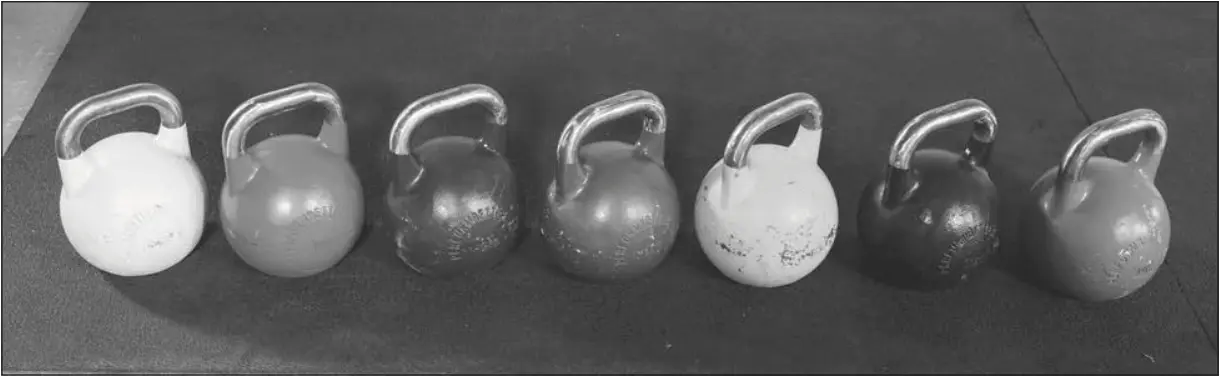
Figure 2.2 Competition kettlebells.
Which Should You Choose?
You may not want to invest the extra expense for competition kettlebells. If your goal is to use kettlebells to increase general strength and conditioning, the cast-iron kettlebell will still get the job done effectively. If you can afford it and prefer the highest quality, invest in competition kettlebells.
Getting Started With Kettlebells
A complete introduction to the kettlebell — what types exist, what qualities matter, what to wear, and where to train.
Important Kettlebell Qualities
What to evaluate when choosing a kettlebell — load, handle, surface, shape, durability, weight, finish, comfort, and price.